


期刊/研討會
Controlled Sediment Retention for Flood Mitigation and Morphological Restoration in the Ma’an River
Author: Dr. Forrest Wu, Happy Mareta, James K C Tseng
This research will focuses on understanding how sediment movement influences river morphology and the right approach to gradually restore channel depth to lower the risk of flood which is important to the surrounding community.Research File
Sustainable Harbour Redevelopment Integrating Fisheries, Tourism, and Public Space: A Case Study of a Multi-Functional Coastal Harbour
Author: Forrest Wu, Happy Mareta, Jane T Y Chung, James K C Tseng, Haris Permadi Zebua
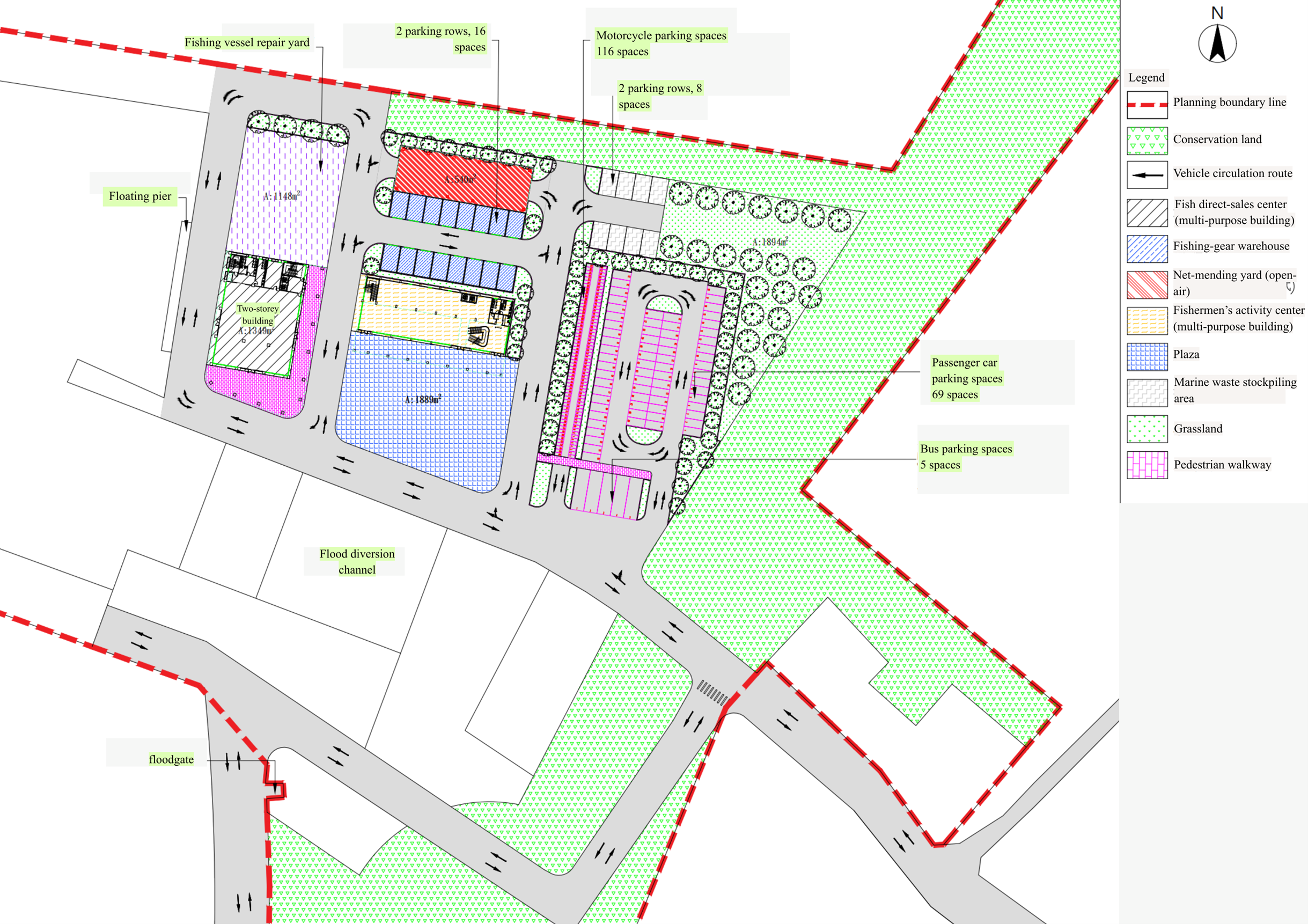
This study explores a sustainable harbour redevelopment model that integrates fisheries infrastructure, public space, and tourism functions while responding to environmental constraints in a coastal context. The research aims to propose a planning and design strategy that balances fishermen’s operational needs with visitor-oriented activities and long-term ecological sustainability. Using a case study approach, spatial zoning, architectural design, and environmental strategies were developed based on site analysis, functional requirements, and green building principles. The harbour layout is organized from the waterfront inward, placing the fish market and public plaza at the front while separating operational zones such as parking and fish net maintenance areas to reduce conflicts between users. Sustainable measures including permeable pavements, native vegetation restoration, rainwater collection for landscape irrigation, low-carbon materials, and natural ventilation are incorporated to enhance environmental performance and reduce resource consumption. The results demonstrate that clear functional zoning combined with environmentally responsive design can improve operational efficiency, visitor experience, and ecological resilience. This study provides a practical reference for future harbour developments seeking to integrate economic vitality, social interaction, and sustainable coastal management.
Keywords: Sustainable harbour, coastal redevelopment, fisheries infrastructure, public space, green building
Research File
Innovative Eco-Friendly Housing Solutions Redefining Sustainable Living and Space Efficiency in Taiwan
Author: Dr. Forrest Wu
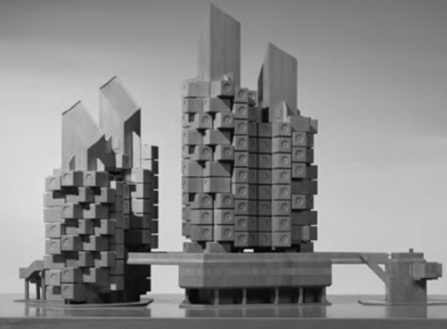
The housing market in Taiwan reflects a critical need for affordable housing, compounded by a shortage of available land and an increasing demand for living space, which have caused housing prices to skyrocket. Despite these challenges, the growth of recent building technologies offers a distinctive opportunity to explore modular design as a potential solution. Such a design approach focuses on space-saving, affordability, and sustainability, providing a fresh perspective on addressing the housing crisis.
This research aims to address housing more thoughtfully, exploring new living styles that allow users to transform and personalize their spaces within budget and need constraints. By emphasizing rapid and affordable construction, this approach provides an innovative solution capable of relieving some of the current housing crisis symptoms. It enables households to access affordable, mobile, and environmentally friendly housing modules that suit their needs. Additionally, this modular design model promotes home ownership while simultaneously offering an attractive, profitable investment.
In the future, this modular housing concept could evolve into prefabricated housing to meet the growing demand for efficient living spaces in urban areas that are becoming increasingly crowded. A critical element of this design process is the inclusion of consumers in both design and assembly, creating new opportunities for personalizing living spaces. This consumer-focused strategy ensures that these homes are tailored to individual lifestyles while maintaining practicality and affordability.
Ultimately, the modular housing system is designed to allow occupants to live comfortably in relatively small spaces without compromising on essential conveniences such as a kitchen, bathroom, and bedroom. By combining sustainability, affordability, and adaptability, this project aims to redefine urban housing and create inclusive, innovative solutions that respond to modern needs.
- Enhanced Design Efficiency: Learn how modular design techniques can simplify the construction process, reduce costs, and save time while maintaining quality.
- Practical Sustainable Solutions: Understand how modular housing integrates environmentally friendly practices, addressing the demand for sustainable and responsible construction.
- Teaching and Research Applications: Faculty and researchers can use this framework to expand their studies or enrich curriculum materials related to urban housing, sustainability, and innovative design methods.
- Scalable Urban Housing Solutions: Discover how modular housing offers scalable solutions to meet growing urban housing demands, providing an approach that is adaptable to various market needs.
KEYWORDS: Innovative Housing Technologies, Prefabricated House, Sustainable Housing, Compact Living, Green Construction
Research File
Implementation of Building Information Modeling (BIM) and Geotechnics Safety Analysis Trends in Residential Project
Author: Fadhilah Rahma Miftahul Jannah, Andi Amaliah Ibrahim, Dr Forrest H S Wu, Daphne P L Chan, Brian Y F Wu
The development of Building Information Model (BIM) in modern times has tremendously aided civil engineers in optimizing and regulating designs, minimizing errors, reducing risk, enhancing accuracy and feasibility, and generally improving projects delivery. In addition, the use of BIM has significantly contributed to time and cost savings. Other advantages include the ability to visualize and analyze data using 3D modeling and relevant engineering knowledge.
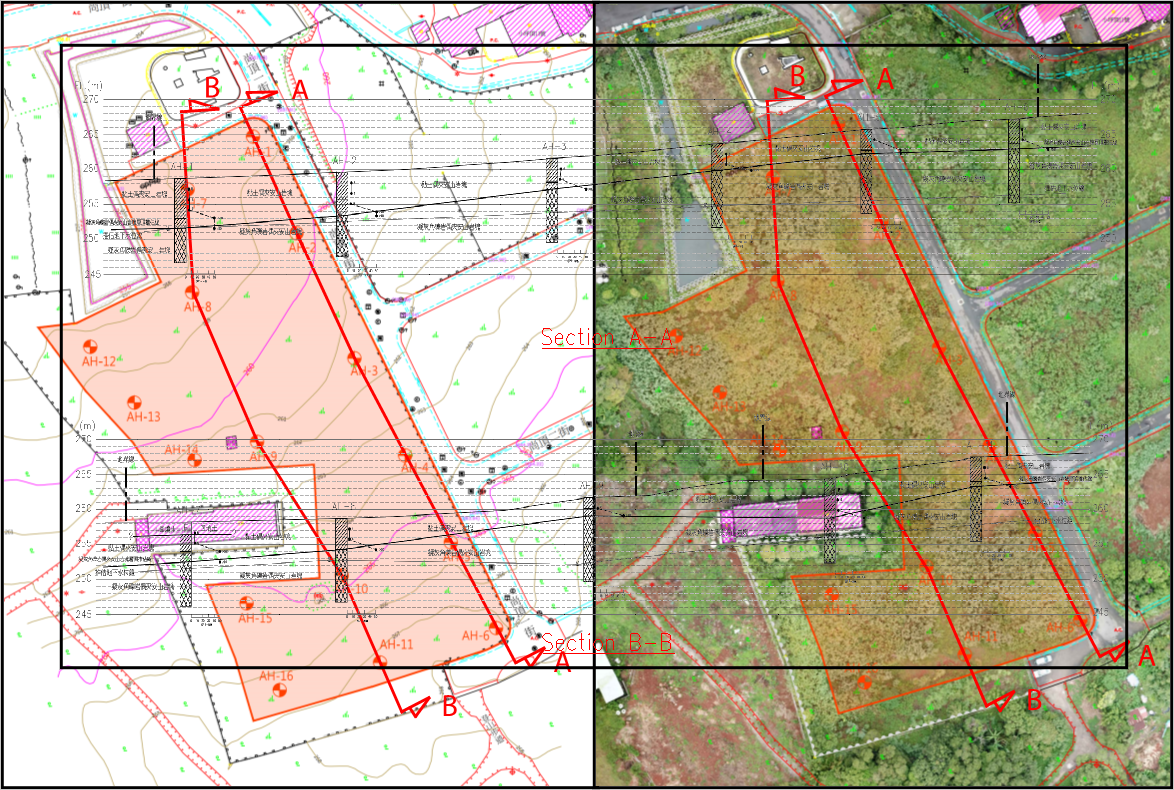
Geotechnical data is usually collected at the start of a construction project in order to better understand the subsurface conditions as well as slope stability issues. Soil qualities, slope geometry, groundwater conditions, and geological features are examples of geotechnical investigation data. The presence of geotechnical data has the potential to improve the Building Information Modeling process. As a result, project teams can integrate BIM to improve their grasp of numerous analytical parameters related to slope safety, critical failure surface, and probable failure model by using the data that has been gathered.
The objective of this study is to explore how observing geotechnics data on residential projects throughout the implementation of Building Information Modeling improves safety, cost efficiency, and time savings. This paper examines the case of residential project planning in which the ground surface has elevation differences that cause slopes at several points using the following method: using real data from the field and then analyzing Geotechnics safety using Sted-win, so that the data could be integrated into Building Information Modeling.
With this information, the results of the Building Information Modeling and Geotechnics Safety Analysis implementation demonstrated that the geotechnics and building structure of this residential project are capable of bearing the load by adding piles at several points prone to landslide measures caused by the buildings and earthquakes. Furthermore, the integration of Building Information Modeling and geotechnical data enhanced design and effective communication for project team decision-making.
KEYWORDS: Building Information Modeling, Sted-win, Management, Geotechnics Safety
Research File